Why gliding?
A sport you never finish
Gliding is to powered flying what sailing is to motorboating. With an engine, the flying serves the trip. In a glider, the flying is the game.
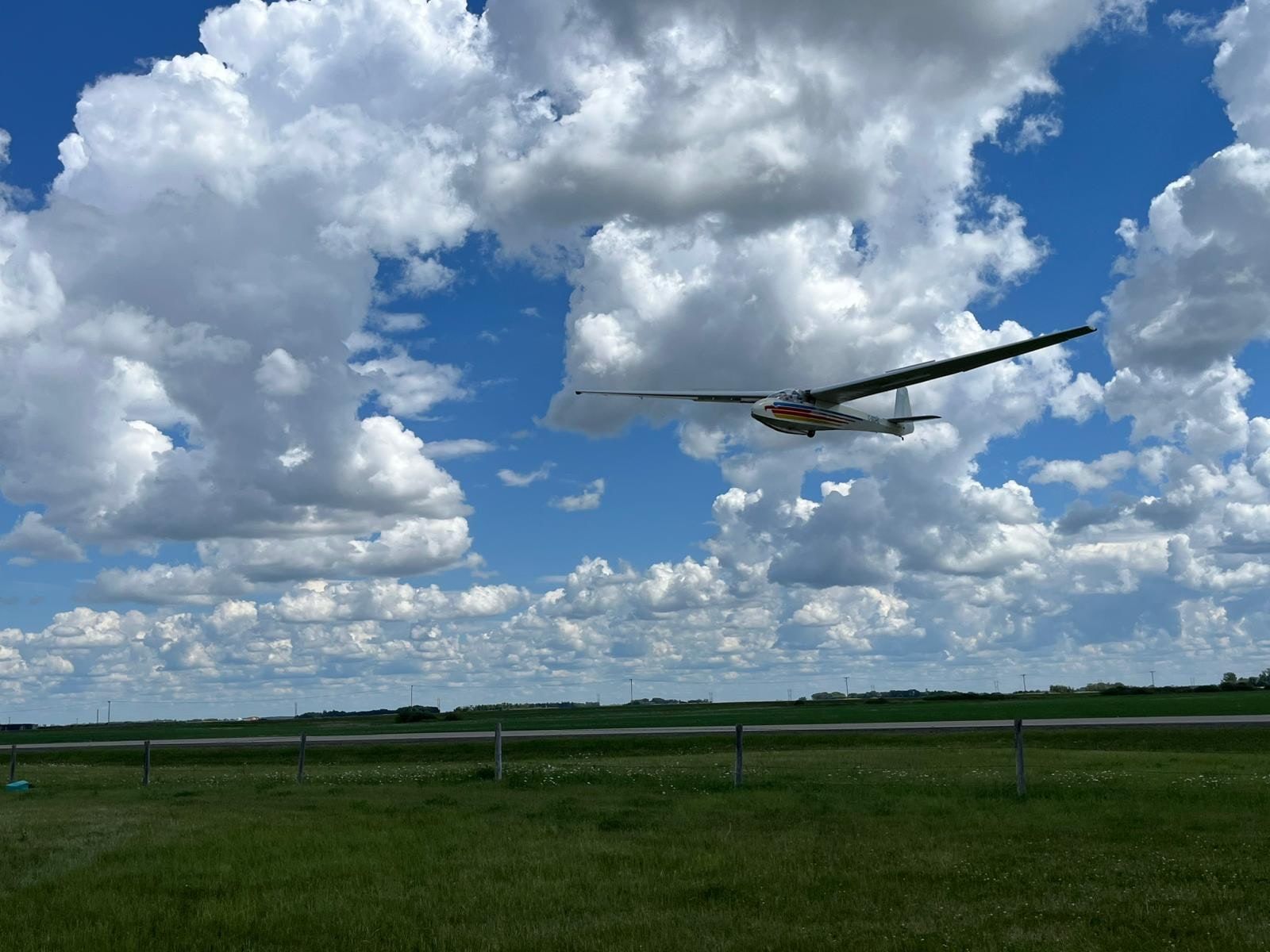
The game
There is no throttle, so every flight is a puzzle: find rising air, climb in it, decide where to go next. The sky changes by the hour. Some days it gives you 10 minutes, some days 10 hours.
A sport for decades
Gliding rewards judgment more than strength, so a 16-year-old and a 70-year-old fly the same sky. And nobody launches alone: it takes a crew, which is why it works as a club.
Within reach
Club instructors teach you for free. Members pay $5 a launch and $30 an hour of glider time, billed by the minute: about $10 for a typical 10-minute instructional flight. Membership is $15 to $150 a year.
A Glider Pilot Licence typically costs $500 to $1,000 in launches and glider time, plus membership: about what 2 to 4 hours of powered flight training costs.
It makes better pilots
Gliding builds stick-and-rudder skill and energy management like nothing else. The captains of both the “Miracle on the Hudson” and the “Gimli Glider” were glider pilots.
Always a next rung
- First solofrom age 14
- An hour aloftyour first real soaring flight
- Cross-countryleaving the home field behind
- Silver badge50 km, 5 hours, 1,000 m climb
- Gold badge300 km, 3,000 m climb
- Diamond badge500 km, 5,000 m climb
And then there's racing
Cross-country gliding is also a race: fly a set course around turnpoints, and the fastest average speed wins. Any flight can be scored online and ranked against pilots around the world.
- 632 kmthe longest cross-country flight out of PAGSC
- 7 hoursaloft on a single flight out of PAGSC
- 3,008 kmthe world distance record